Unicorn Baby Review: Stitching Sweetness into Real Projects
There’s a quiet moment before every design test – that split second where the needle hovers above fresh fabric and you wonder whether the thread will fall into place or fight you every step of the way. When I first opened the Unicorn Baby embroidery file, I felt none of that tension. The design felt immediately gentle, almost effortless. But I’ve learned not to trust a screen preview alone. What matters is how a motif behaves on a onesie, a tote, a tiny pillowcase, and whether it can truly carry a handmade product without losing its charm.
First Look: Why Simplicity Wins Every Time
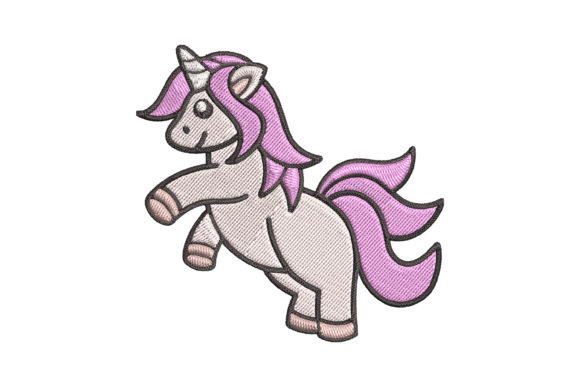
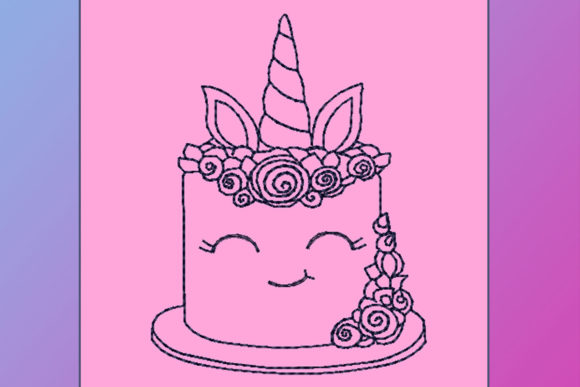
The Unicorn Baby design belongs to that rare category of machine embroidery files that don’t try too hard. It’s a clean, soft-bodied unicorn profile with a sprinkling of gentle detail – a subtle curve for the neck, a delicate wisp of mane, a tiny horn that catches the light without gaudy sparkle. There are no tangled outlines, no excessive color changes, and no fragile stitch clusters that threaten to vanish after one wash. From a production standpoint, that minimalism is gold. The satın stitch areas feel well planned, and the fill stitch sections promise decent coverage without turning stiff. I could already picture it on a pale pink cotton bodysuit, looking like it grew there.
The embroidery file ships with multiple formats, which instantly broadens its usefulness for those of us who switch between machines or work with clients using different setups. The design’s mood is undeniably nursery-friendly, but it carries enough innocence to double as a whimsical accent for older kids’ tees or playful home textiles. I saw no trapped islands of thread, no obvious registration pitfalls – signs that the digitizer understood how embroidery actually behaves, not just how it looks in a software preview.
Stitching It Out: A Real Baby Shower Test
Last month, a regular client asked me to create a personalized newborn gift set for her sister’s baby shower. She wanted something angelic but not fussy, something that would hold up through countless laundering cycles and still look intentional. Unicorn Baby immediately came to mind. I hooped a soft cotton interlock onesie with medium-weight cutaway stabilizer, threaded up a muted lavender thread color for the body and a whisper of metallic silver for the horn, and let the machine run.
The first stitch-out stopped my usual fretting. The running stitch underlay anchored the shapes securely, and the satin outline stayed crisp even on the slightly plush fabric. There was no puckering around the horn, no thread breaks in the mane area – something that often plagues delicate embroidery motifs. After heat-pressing a soft backing to protect baby skin, I held the finished onesie up to the light. The design looked hand-drawn in the best way, with just enough texture to feel premium. The client’s reaction confirmed what I’d hoped: this wasn’t just a cute picture; it was a tiny, tangible heirloom moment.
Where the Design Truly Shines
If you’re a craft business owner, an Etsy seller, or someone who stitches for local boutiques, you need designs that flex across multiple blanks without constant re-hooping adjustments. Unicorn Baby earned its spot in my core library for several real-world uses:
- Baby apparel: bodysuits, bibs, sleepsuits, and tiny hats – the soft curves suit the organic shapes of infant clothing perfectly.
- Nursery décor: cushion covers, lightweight receiving blankets, fabric wall art, and crib sheets. The design’s fable-like quality turns simple textiles into cherished keepsakes.
- Tote bags and gift pouches: imagine a linen tote with the unicorn peeking from the bottom corner, paired with a matching card. It sells effortlessly at craft fairs.
- Handmade gifting accessories: iron-on patches for denim jackets, a subtle corner accent on a baby quilt label, or even a personalized embroidered storybook cover.
- Holiday merchandise: think pastel Christmas stockings, Easter basket liners, or Valentine’s Day tees where the unicorn becomes a subtle symbol of love.
Performance on Tricky Fabrics and Small Hoops
Despite its gentle appearance, the design taught me a few important lessons about placement and fabric choices. On extremely thin jerseys, the motif’s filled areas can feel slightly dense if you skip the right stabilizer – I wouldn’t stitch this directly onto a lightweight onsie without a good cutaway backing. On heavily textured towels, the fine horn detail can lose sharpness if you don’t use a water-soluble topping. I tested a version on a dark heather gray sweatshirt and noticed the pastel threads lost contrast; a quick switch to brighter thread shades and a knock-down stitch layer underneath brought the unicorn back to life. That small tweak made all the difference for customer trust – no one wants a barely visible design on a boutique garment.
For those working with small hoop sizes, the design likely fits a 4x4 inch field, but I advise checking actual dimensions. On a curved cap front, you’ll need to breathe gently when digitizing the center reference point – the unicorn’s vertical posture might require a slight rotation to avoid distortion. If you’re offering custom apparel, always test on a fabric swatch with identical grain and stretch before committing to a finished product. I learned early that the same design can stitch beautifully on woven fabric yet pull disastrously on a knit if you haven’t adjusted your hooping tension.
Thread, Color, and Placement Wisdom
Because Unicorn Baby is open and airy rather than densely packed, it invites creative thread color play. I’ve used soft coral and mint for a retro nursery vibe, warm golds and creams for a more elegant feel, and even monochromatic white-on-white for a subtle tone-on-tone look that photographs beautifully for printable mockup use. The simplified shapes also make it surprisingly forgiving on dark fabric – if you underlay correctly, there’s minimal show-through. I’ve even tested a solid black sweatshirt with neon thread, turning the unicorn into a statement piece that customers loved.
When planning a product listing or boutique window display, remember that this design reads as gentle rather than bold. It won’t scream from across the room, but it will draw someone in for a closer look – exactly the kind of engagement that sells a premium handmade item. I’ve noticed that buyer engagement lifts when the embroidery feels personal and delicate; this design delivers that whisper-soft appeal consistently.
The Small Business Perspective: Is It Worth Stocking?
From a purely commercial angle, Unicorn Baby is a smart asset for anyone building a line of baby-themed finished product. It stitches relatively quickly, uses a modest number of thread changes, and doesn’t consume excessive stabilizer. That efficiency adds up when you’re producing multiple items for a craft show or restocking an online shop.
However, I’d caution against using it as a standalone selling point for a digital embroidery file shop unless you pair it with similar coordinating designs. It works best as part of a cohesive nursery collection, where the simplicity becomes a unifying aesthetic rather than a limitation. Customers trust shops that show a clear point of view; a single unicorn alone might not build that trust, but a set of whimsical, clean-lined baby motifs certainly will.
Practical Notes Every Stitcher Should Read
Before you load Unicorn Baby onto your machine for a paying project, run through this working checklist. It’s the same routine I follow for every embroidery project that leaves my studio:
- Test on a scrap of similar fabric and weight – don’t assume your usual stabilizer translates perfectly to a new textile.
- Check the actual stitch density in your software preview; even a simple design can feel stiff on lightweight cotton if the fill is too heavy.
- Review black-and-white and sepia mockups to ensure the design holds its shape outside a full-color screen. This is critical if you sell wholesale or create design assets for others.
- Verify hoop size and file formats – the product description says multiple formats are included, but confirm which ones before purchase. The last thing you want is to buy a design your machine can’t read.
- Secure licensing clarity if you plan to sell finished stitched items commercially. Most small designers allow this, but it’s your responsibility to check. I’ve seen friendships and shops crumble over a simple license oversight.
- Wash test the final product. Embroider the design on a sample garment, launder it as the end user would, and assess thread hold and softness. For baby items, this step is non-negotiable.
Honest Gaps and When I’d Reach for Something Else
No design is omnipotent. If a client wants an intricate, multi-layered unicorn with shading gradients and forty color stops, Unicorn Baby will feel too plain. It’s also not the best candidate for extremely large-scale placements – scaling up might reveal proportion issues or overly wide satin columns that catch on fabric. On high-loft plush blankets, the finer horn detail may bury slightly, so I’d reserve it for smoother pile textiles. And while I adore it for baby wear, I wouldn’t force it onto a heavily structured cap or a bumper sticker-style patch without adjusting the composition.
Final Stitch Impression
After testing across onesies, totes, and lightweight sweatshirts, Unicorn Baby earned a permanent spot in my design library not because it’s flashy, but because it’s reliable. It creates the kind of quiet, soulful stitching that parents notice and gift recipients remember. For small shop owners, hobbyists, and anyone who stitches with a purpose beyond decoration, that tactile, real-life magic matters more than a thousand digital preview colors. Treat it kindly, pair it with careful fabric choices, and it will repay you with products that feel handmade in the most beautiful sense of the word.