Evaluating the Lotus Flower Valentine Love Redwork Design
Whenever I pull up a new embroidery design to consider for a client project or my own small shop inventory, my first question isn't just about aesthetics—it's about practical fit. How will this design translate from a digital embroidery file into a tangible, beautiful finished product? Today, I’m looking closely at the Lotus Flower Valentine Love Redwork design, and I’m considering it from that exact, real-world perspective.
A First Impression: Gentle Romance and Clean Lines
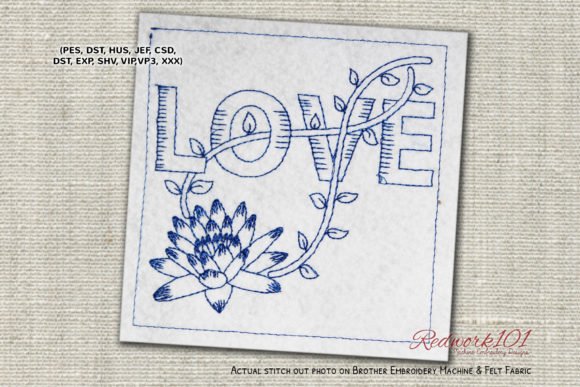
The Lotus Flower Valentine Love Redwork design immediately strikes me with its quiet elegance. It’s not a loud, sparkly Valentine’s Day motif; instead, it leans into a more symbolic, serene romance. The lotus flower, a symbol of purity and resilience, paired with a classic “Love” script, creates a mood that’s both heartfelt and sophisticated. The layout feels balanced, with the flower acting as a solid anchor for the more delicate lettering. This isn’t a design that shouts; it whispers, which can be incredibly powerful on a handmade product. The detail level appears manageable—the petals have clear, defined areas for fill stitches, and the lettering looks open enough to stitch cleanly without becoming a dense, challenging mess. Its visual personality is gentle, timeless, and would appeal to someone looking for a gift that feels thoughtful rather than generic.
The Natural Habitat: Where This Design Thrives
Let’s picture a specific scenario. I’m preparing a custom order for a client who wants an embroidered linen pillow cover as a wedding gift. They want something romantic but not overly floral or cliché. The Lotus Flower Valentine Love Redwork design comes to mind instantly. Its themes of love and growth are perfect, and its clean lines would translate beautifully onto that flat, natural fabric. But its applications go far beyond that.
For custom apparel, like a lightweight sweatshirt or a classic t-shirt, this design offers a mid-sized focal point that doesn’t overwhelm the garment. On a tote bag, it becomes a lovely, permanent accessory. For baby clothes or nursery decor, the lotus symbol adds a layer of meaning about new beginnings, making it a sweet, personalized gift. As an embroidered patch, it could be applied to a cap or apron with excellent results, given its contained shape. For small business merchandise—think boutique tea towels, simple blanket corners, or holiday gift items—it provides a versatile, seasonally-relevant asset that can be produced consistently. In printable mockups for digital product sellers, this design presents clearly, suggesting a high-quality finished product to potential buyers.
Visual Appeal and Professional Impact
Using a design like this in a craft business or for commercial embroidery projects directly affects customer trust and perceived value. A clean, well-executed rendition of this motif on a product speaks to professionalism and attention to detail. The handmade presentation feels intentional and skilled. For an Etsy seller or creative entrepreneur, it supports brand consistency if your niche is in elegant, meaningful gifts. Its giftability is high—it’s recognizable as a love-themed item without being dated, making it suitable for anniversaries, Valentine’s Day, or just a general expression of care. This kind of design engages buyers who are looking for something specific and well-made, not just a mass-produced image.
Considerations and Careful Applications
Like any embroidery design, the Lotus Flower Valentine Love Redwork has places where it will shine and others where it requires a bit more forethought. The optional box stitch mentioned in the description is a key point. If that outer box is part of the final stitch-out, it creates a bold, framed look. If it’s omitted, the design becomes softer and more integrated into the fabric. This choice dramatically alters the final feel.
I would be cautious using this design on very small hoop sizes if the detail in the lotus petals and lettering is fine. Shrinking it too much might blur those elements. On highly textured fabrics like thick towels or some sweaters, the clean lines of the script might lose definition. On stretchy fabric or dark fabric, the usual rules apply: robust stabilizer and possibly adjusting thread colors for maximum contrast. Stitching it on curved surfaces like caps requires checking how the circular lotus form adapts to the curve. And for products destined for frequent washing, like kitchen towels or baby items, ensuring the stitch density is not so low that it becomes fragile is important.
A Designer’s Practical Notes Before Hooping
Before I run this machine embroidery design for any real project, my personal checklist kicks in. These steps save time, materials, and ensure the final product meets expectations.
- Test on scrap fabric first. Use the same material and weight you intend for the final project. This reveals how the fill stitches behave and if any thread colors need adjustment.
- Check thread color contrast. Especially if deviating from a redwork or bluework scheme. How does the design look on light versus dark backgrounds?
- Review stitch density in the file. Are the satin stitch borders or fill areas too dense for your chosen fabric? Too sparse?
- Confirm the effective hoop size. The design needs to fit comfortably within your hoop without forcing awkward placement.
- Inspect the small details in the lettering. Stitch out a section to see if the “Love” script remains clear and legible.
- Test it in black and white mockups. This helps visualize it as a digital asset or for listings where color isn’t the focus.
- Use proper stabilizer. Match the stabilizer to the fabric—this is non-negotiable for professional results.
- Clarify licensing. Before selling finished items or using it in commercial embroidery, always confirm the license terms for the digital embroidery file. This protects your business.
Ultimately, the Lotus Flower Valentine Love Redwork design feels like a reliable, versatile tool in a maker’s toolkit. It carries a specific mood that can elevate a simple product into a meaningful one. Its success hinges not just on the digital file, but on the thoughtful application—choosing the right fabric, the right product, and the right execution. For the designer, small business owner, or hobbyist looking to create something beautiful with a touch of serene romance, this design offers a solid, lovely foundation to build upon.